
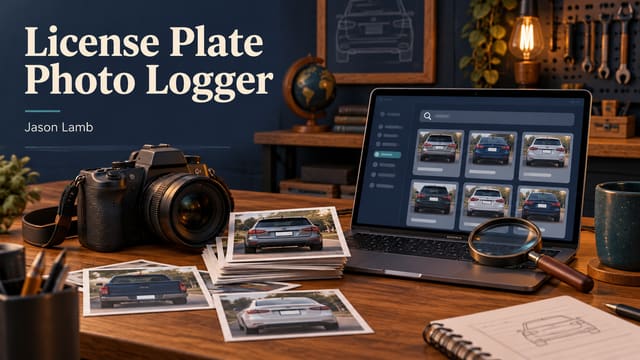
A folder of photos can contain useful information without making that information easy to find. The License Plate Photo Logger explores how to turn one part of an image into a searchable record.
The app accepts uploaded plate photos, extracts a proposed plate value, and stores a JSON log. Its documented scan modes include AI vision, OCR services, local Tesseract when available, and manual logging. That makes extraction a configurable step rather than a requirement that every installation use the same service.
The photos themselves can be difficult inputs. Angles, reflections, cropping, and surrounding text all affect what a scanner sees. The project keeps editing and reprocessing available so an extracted value is something that can be corrected, not an unquestionable fact.
Duplicate handling works at two levels. A file hash identifies the same uploaded image, while normalized plate values allow repeated plate records to be grouped. Those are different questions: whether a file has already been processed and whether another image appears to show the same plate.
Available photo metadata can add dates and location information, but that information is conditional. A photo without GPS metadata does not suddenly gain a reliable capture location. The app can also record a plate’s visible state separately from other image metadata.
Later changes focus on making the log manageable: live search, compact columns, detail overlays, and individual or bulk reprocessing.
This project is an image-to-record experiment, not a vehicle-owner lookup service. The interesting work is building a reviewable path from an imperfect image to a useful entry, while preserving enough context to revisit the result.
Update history
These notes record article updates associated with repository changes. The original publication date is retained.
- — Converted automated article narration to neutral third person and added public update history. No application functionality changed. GitHub source